
Why Church Forms Fail When Nobody Owns the Follow-Up
A form submission only helps when a clear person, process and response are waiting behind it.
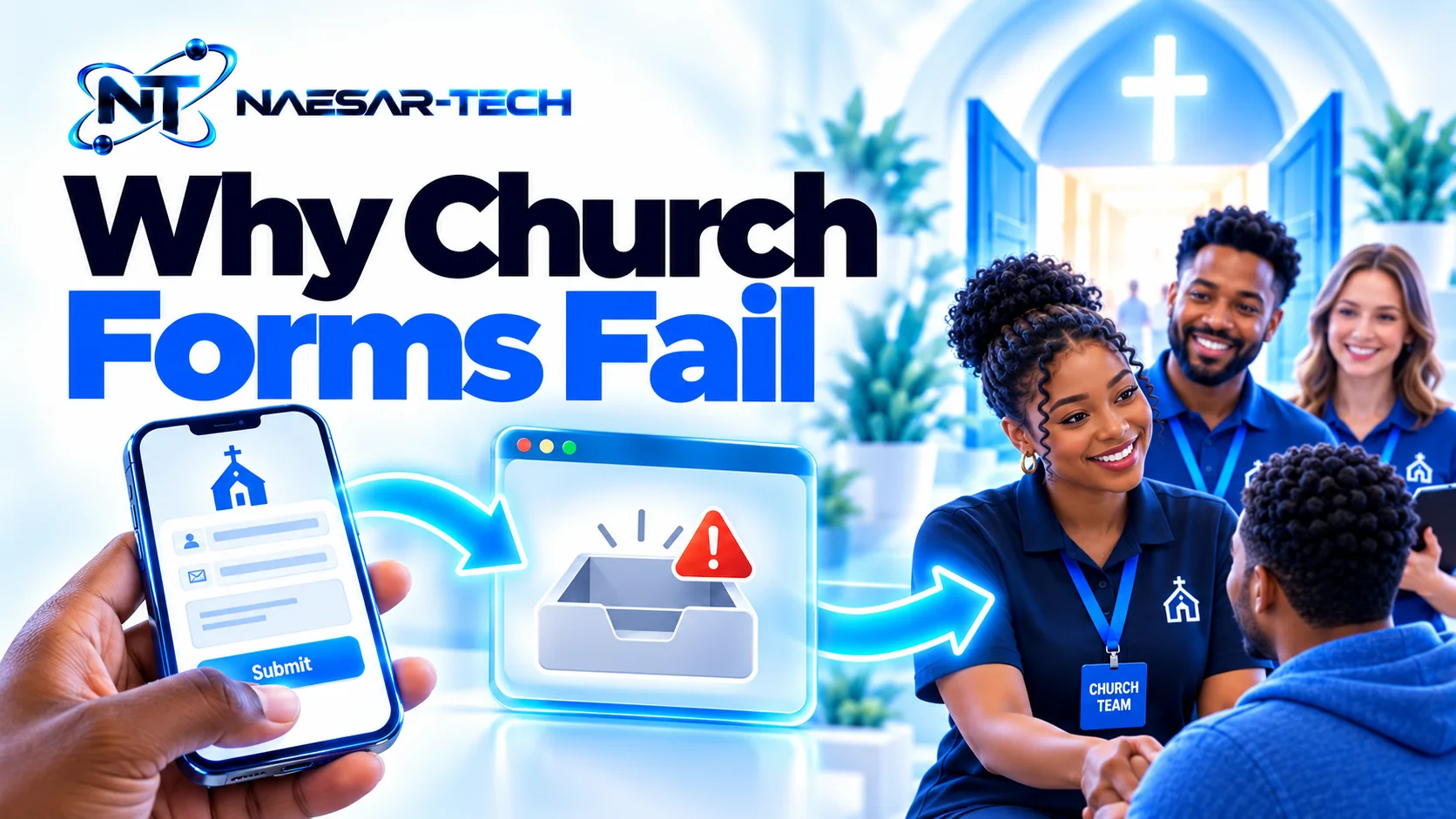
A church form can be beautifully designed and still fail a visitor. The submission arrives in a shared inbox, the right person is away and the sender hears nothing. The technology worked. The ministry handover did not.
Give each form a purpose and owner
A plan-a-visit request, prayer request and volunteer application need different responses. Name the team responsible for each form and the person who covers absence. Keep access to sensitive information limited to those who need it.
Define the first response
Write a short confirmation that explains what happens next. Set a realistic response target and make it visible to the responsible team. A personal reply should answer the actual request; an automatic message is useful reassurance, not the completed follow-up.
Track the outcome
Record whether the enquiry was assigned, contacted and resolved or moved to another team. Create a way to notice an overdue response. Without this, a dashboard can count submissions while people quietly fall through the gap.
Test the route yourself
Submit every public form on a phone. Check the confirmation, notification, ownership and eventual reply. Repeat the test when team roles change. A form is part of a process, and processes need maintenance.
Begin with the highest-impact form and make its handover dependable. Once the team can follow up consistently, automation can reduce repetitive administration and help people receive a timely, human response.