
Church Email, WhatsApp and Social Media: Which Message Goes Where?
Choose church communication channels by audience, urgency and the action people need to take.
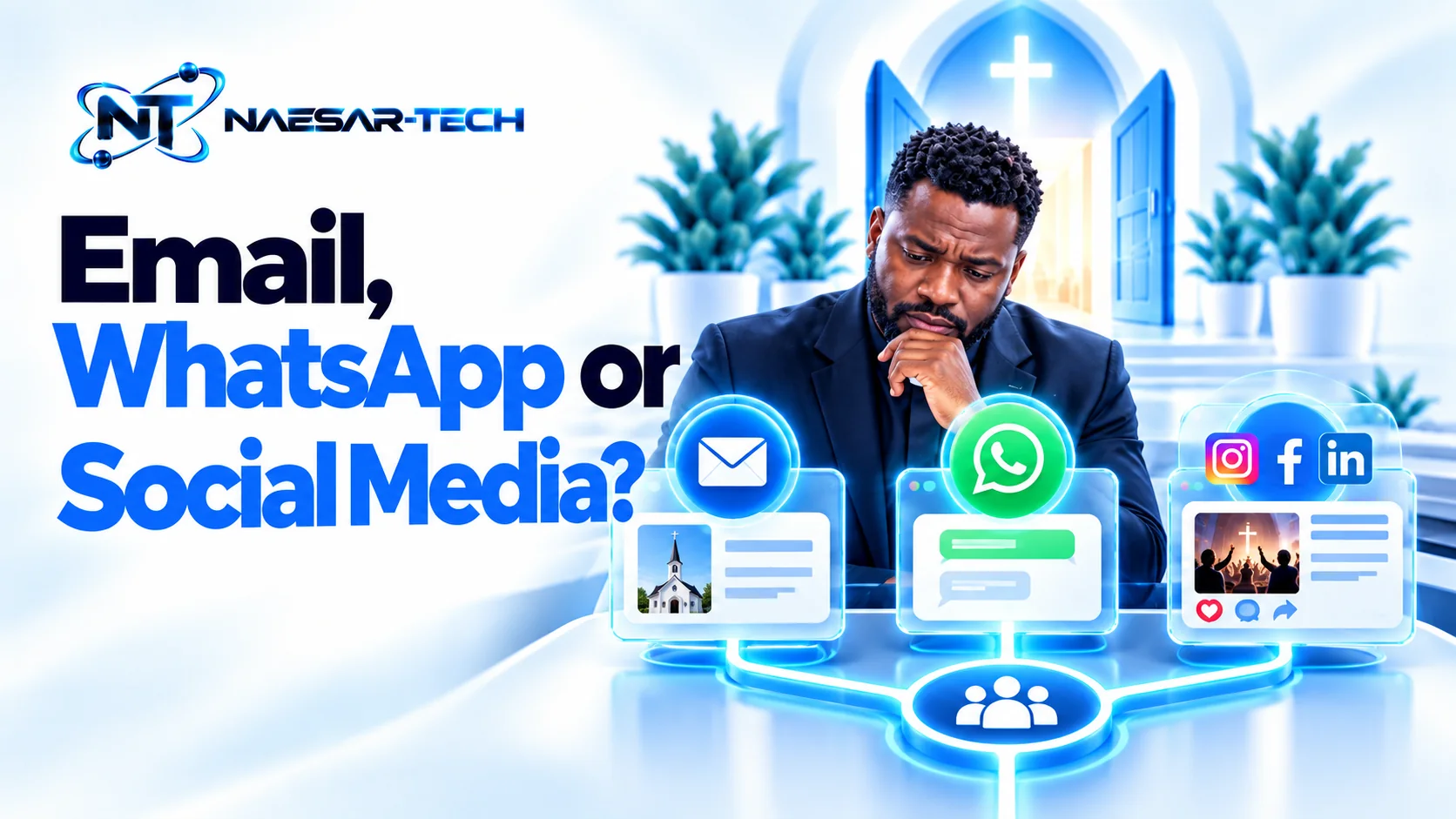
A message can be posted in five places and still miss the people who need it. More channels create reach, but they also create repeated work and conflicting versions. A simple channel plan starts with the audience and the action.
Use the website as the stable reference
The website is the place for durable details such as service times, event information and next steps. Other channels can point to it. When a date changes, update the source page first so messages are not sending people to outdated information.
Use email for considered information
Email suits a weekly digest, a registration confirmation or a clear follow-up that people may need to find later. Give each message one main purpose and a useful subject line. Keep permission and preferences in mind rather than treating every address in a database as a general mailing list.
Use messaging for timely, relevant contact
WhatsApp or a similar tool can be useful for a defined group, a near-term reminder or a practical team update. Set expectations about who can post, what belongs in the group and when a private pastoral conversation should move to a safer channel.
Use social media for discovery and invitation
Social posts can help people see church life and discover an event, but a feed is a poor place to store essential details. Link to a reliable page for the time, location and registration. Do not assume every member sees every post.
Before publishing, ask: who needs this, how soon, what should they do, and where is the definitive information? One well-routed message is more useful than five identical announcements.